- Forgotten Lives of Oxfordshire
- Posts
- Voices from a deserted village
Voices from a deserted village
by Julie Ann Godson
A wry account of a protesting female demanding her legal rights outside a busy church in Oxford on a Friday morning no doubt provided an entertaining snippet for readers of the Oxford Journal in 1761. But the proper marshalling of even the faintest clues from the record can point the determined researcher in the direction of a hidden story. In this case, only the chance survival of the canny young lady’s will sixty-five years later reveals what the fuss was about, and gives us an insight into the lives of the residents of a deserted village.

The Marriage Act of 1753 imposed new responsibilities on couples
SAID THE NEWSPAPER: “A few days ago a Countryman who had patiently resided in one of the Parishes of this City for a Month, conformable to the Quarantine appointed by the Marriage Act having at length, though with some Difficulty, got his Sweetheart into Carfax Church, was nevertheless disappointed; for the Girl (a Breeches Maker’s Servant) alleged that her Mother would be angry, and further, that she would not be married till she herself pleased. The Man however did not still despair of succeeding, but she no sooner saw the Clergyman who was to marry them, than she bawled out, ‘Doan’t put on that white Gownd, for upon my Salvation then I won’t be married now.’ We are told that the Wedding Ring was afterwards sold and re-bought three or four Times; but at last we find she has condescended to make the poor Man happy.”1
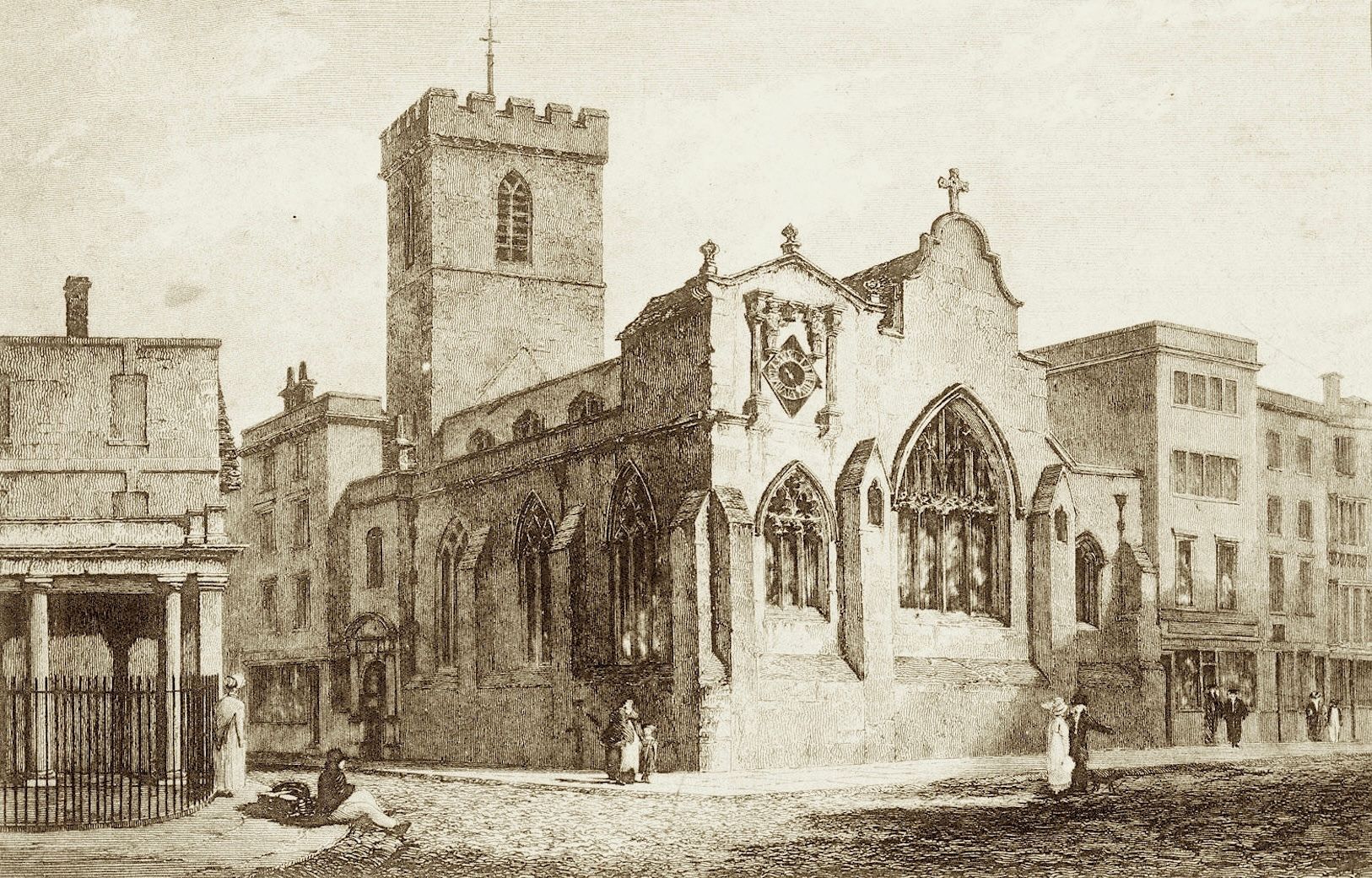
Church of St Martin, Carfax, as it would have looked at the time
If we check the facts, we find the parish register suggests that two marriages took place at St Martin’s during the relevant period: on 14 January 1761 Thomas Perry married Elizabeth Wickes, and on 16 January 1761 John Hart married Hannah Aldridge Hall of Eaton Hastings.2 To the experienced observer, this second pairing would seem more likely to be that referred to in the newspaper report. The groom’s name “Hart” was a familiar one along the river Thames, especially around Lechlade, Buscot and Eaton Hastings. The reference to the bride as a “breeches maker’s servant” might have been a typical sneer where the couple were considered socially unequal, particularly where the groom is marrying beneath his rank. But Hannah was baptised to parents Simon and Mary Hall in Ampney Crucis in Gloucestershire.3 The town’s wealth was based on wool, and this connection with cloth may have given rise to the taunt that Hannah was a “breeches maker’s servant”. Although the Harts’ status as watermen could hardly be described as exalted, theirs was a steady and skilled occupation that any young miss should consider herself lucky to be associated with.
Clearly something was troubling Hannah on this, her happiest of days. In recent years, the new Marriage Act of 1756 had attempted to codify the requirements for a valid marriage. Runaway marriages between minors and secret elopement involving the compulsion of heiresses would no longer do; the ancient custom of hand-fasting in the porch of the church must now be reinforced by the presence of an officer of the church, witnesses and the correct paperwork. Rather than any maidenly reluctance to enter the married state, Hannah’s pre-nuptial concerns probably centred on the fact that John Hart already had sons from an earlier alliance.4 It is surely the kind of detail that might prompt in a canny young woman a desire for wise maternal guidance. Hannah was only 21, and she sensibly demanded the presence of her mother.5
The survival of one document throws light on what might otherwise remain a mystery. Hannah’s will, made sixty-five years after her marriage, was expressly intended to “avoid controversies after my decease”.6 Are not all wills made essentially essentially for this purpose? It seems that Hannah may have anticipated some special trouble regarding financial arrangements and wished to make the justness of her legacies perfectly plain. John and Hannah had two sons and two daughters to add to the two sons John already had. Her will states clearly that her own son William was “already sufficiently provided for” upon his father’s death in 17938 , i.e. in Hannah’s own lifetime. Somehow, she had prevailed on her husband to give special treatment to their son William in preference to his own sons from his first marriage.
At this distance it is impossible to know why John Hart agreed to this or, indeed, why Hannah felt that a mere shilling was appropriate for her second son Richard after her own death. Was William especially responsible and Richard especially feckless? Her husband’s sons John and James by a previous wife received twenty pounds and ten pounds respectively – respectable sums calibrated to ward off claims against William. Funds were also set aside to purchase an apprenticeship for a grandson, then the remainder of the estate was split between Hannah’s two married daughters who were appointed executors. Surely this was the same Hannah Aldridge Hall who caused a scene by wanting all the i’s dotted and the t’s crossed before her marriage at Carfax all those years ago.
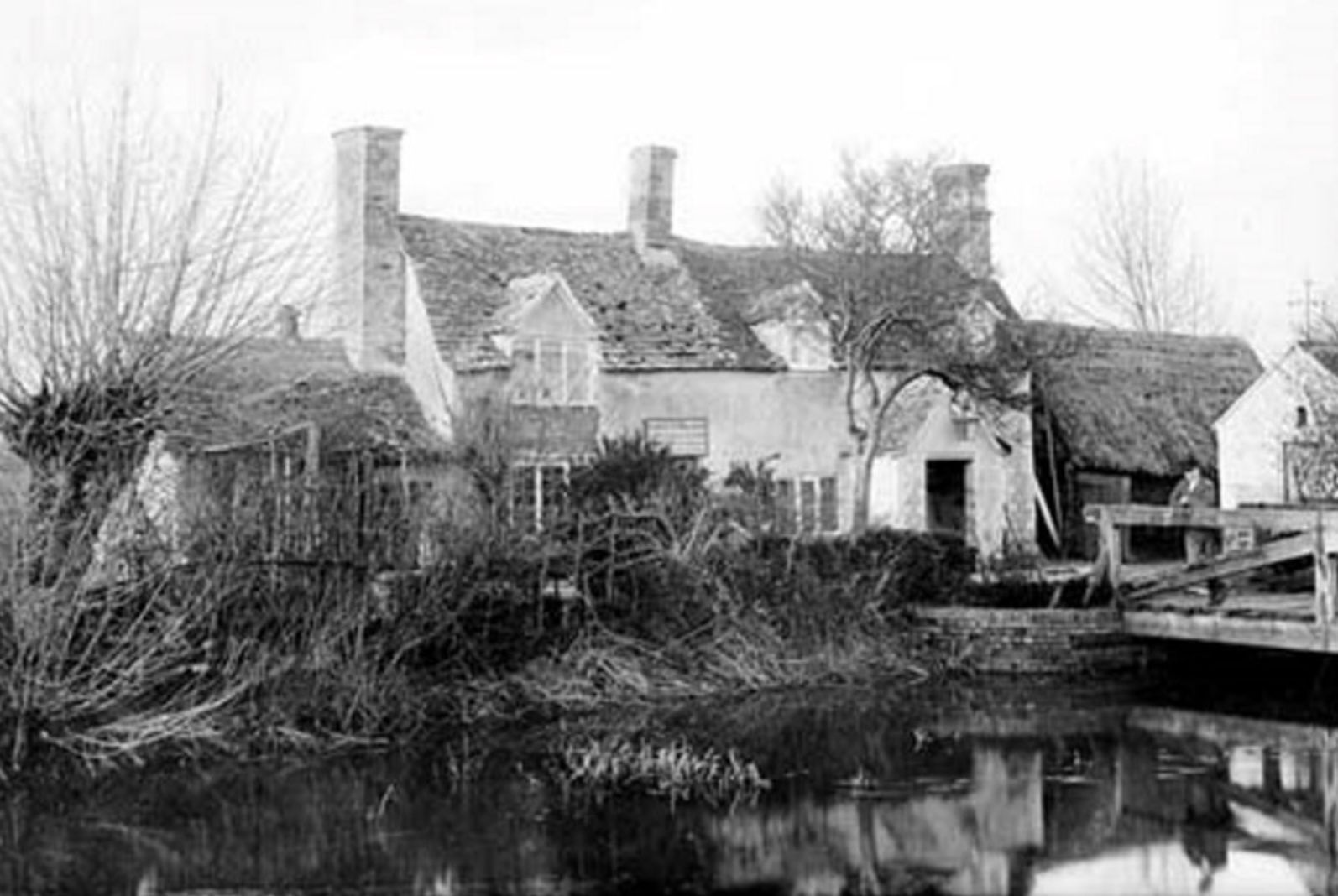
The Angel Inn at Eaton weir
Eaton Hastings village had already just about fizzled away by the time of Hannah’s arrival there. The usual factors are mentioned by historians as causes: enclosures, the Black Death, the creation of sheep runs. In the 19th century the settlement was reduced just to a church, a couple of farms and the weir. Census records from 1841 onwards show the Hart family involved locally in the connected trades of fisherman, weir-keeper and licensed victualler in the following century. Indeed, Eaton weir became known locally as Hart’s weir because of its proximity to the Hart family pub, the Angel Inn. A snippet of local memory from years later nicely illustrates the pragmatism with which the Harts used their facility on the river to circumvent tiresome excise issues: “The innkeeper, according to the account of the villagers, was a notorious smuggler. He obtained his kegs of spirit from the bargemen who came up from London and concealed them in the bed of the river. To the kegs he attached ropes or chains; when he wanted one he took a long-handled iron rake and groped on the bottom till he struck the chain and so got it ashore. Whoever wanted whisky or brandy came down to the Weir after dark and was supplied by the innkeeper. The spot is lonely and difficult of access in the winter; there was little fear of being surprised by the Customs officers.”7

A paddle and rhymer weir on the Upper Thames
These tough, no-nonsense watermen had reason to thank their grandmother and great grandmother for her watchfulness on their behalf in safeguarding their interests even before she married into the Hart family. We don’t know whether they were aware of the determined character of their forebear, but thanks to a flippant newspaper anecdote analysed alongside historical documents, we can now discover details that give colour to the lives of real Oxfordshire people long ago forgotten by history.
• Anybody with an Oxfordshire Libraries card can access Ancestry.com and FindMyPast.com free of charge in county libraries, providing they are able-bodied and can get to the library in the first place. Housebound members still have to pay for access from home. Apply online at: https://www.oxfordshire.gov.uk/oxfordshire-libraries/using-library/join-library
• Julie Ann Godson’s Oxfordshire history books are available at Amazon.com.
1 Oxford Journal, 24 January 1761.
2 Oxfordshire, England, Church of England Baptism, Marriages, and Burials, 1538-1812; Reference Number: PAR207/1/R3/1, Oxford St Martin, 16 January 1761.
3 Gloucestershire, England, Church of England Baptisms, Marriages and Burials, 1538-1813, Reference Number: Gdr/V1/9, Ampney Crucis, 8 Jul 1739, Hannah Alarid Hall.
4 The National Archives; Kew, Surrey, England; Records of the Prerogative Court of Canterbury, Series PROB 11; Class: PROB 11; Piece: 1712, Eaton Hastings, 10 May 1826, Hannah Hart.
5 Gloucestershire, England, Church of England Baptisms, Marriages and Burials, 1538-1813, Reference Number: Gdr/V1/9, Ampney Crucis, 8 Jul 1739, Hannah Alarid Hall.
6 The National Archives; Kew, Surrey, England; Records of the Prerogative Court of Canterbury, Series PROB 11; Class: PROB 11; Piece: 1712, Eaton Hastings, 10 May 1826, Hannah Hart.
7 Williams, Alfred, Round About the Upper Thames, Duckworth & Co, 1922.
8 Berkshire Record Office, D/A1/85/150, John Hart, 1793.