- Forgotten Lives of Oxfordshire
- Posts
- Cheapjacks and dancing bears
Cheapjacks and dancing bears
by Julie Ann Godson with Jen Farmer
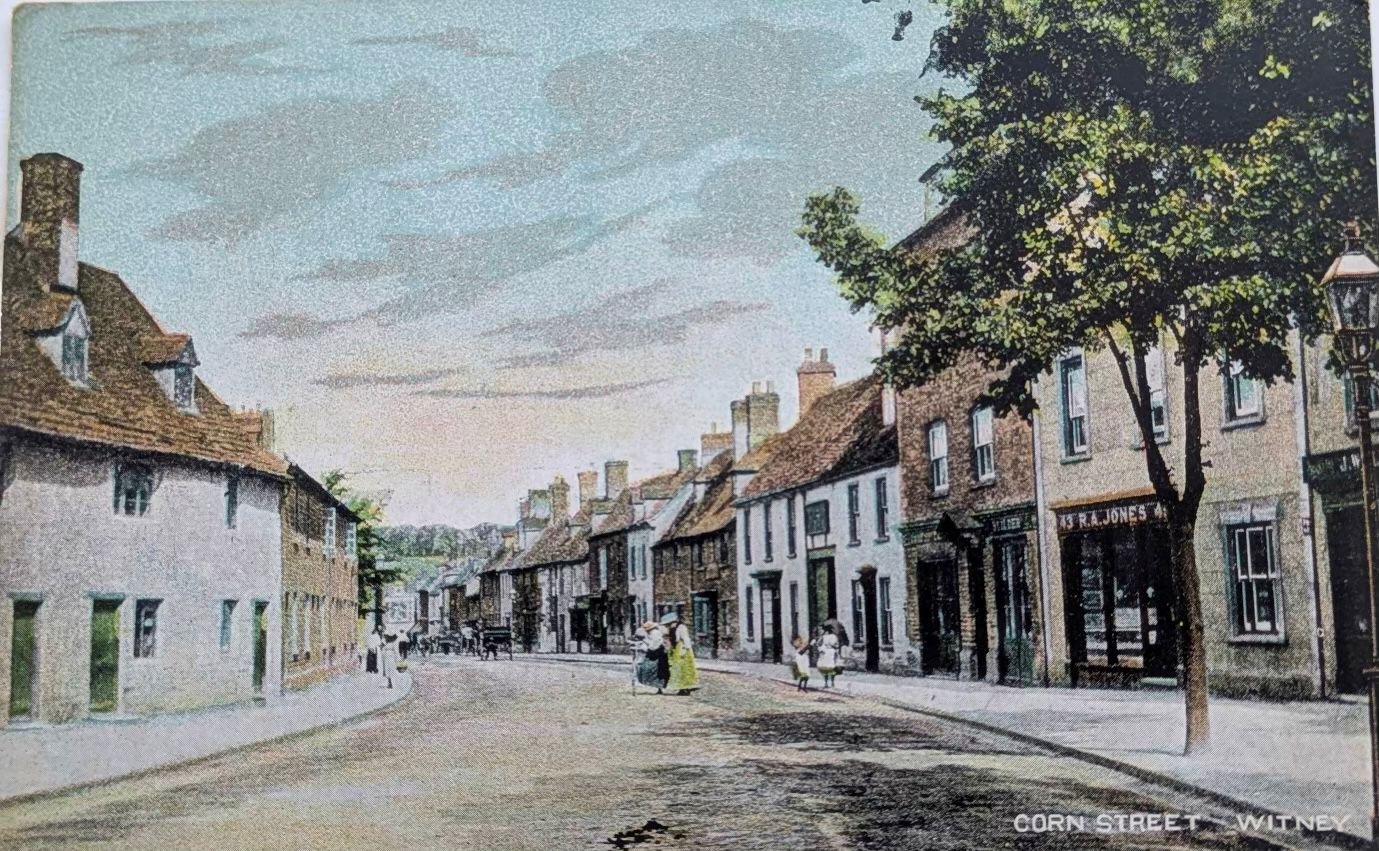
A handful of families dominated the Witney commercial scene during the first half of the twentieth century. Older residents still look back fondly on the days when you could walk along the main streets past locally-owned businesses with trim shop-fronts proudly displaying their wares – such a contrast to the bland, national chains we see today. Now is perhaps our last chance to record the memories of these hard-working tradesmen, once the very fabric of a lost way of life. I am delighted to say that Jen Farmer, a member of the Jones family, has done just that and she has helped me to put this piece together.
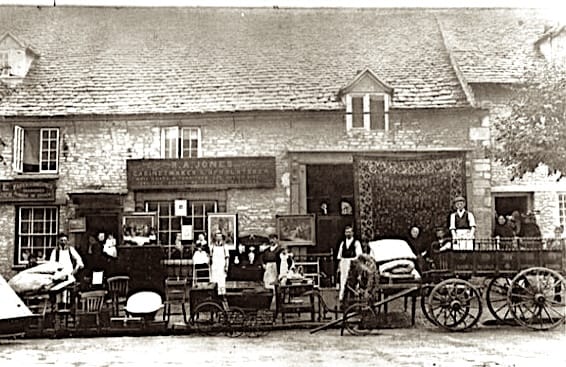
The premises of R A Jones at 43 Corn Street, Witney
R A JONES, established at 43 Corn Street in 1840, specialised in cabinet making, upholstery and house clearance. In the early years, removals were carried out by horse and wagons with the horses stabled at the rear of 43 Corn Street. At this time they were mammoth undertakings. A removal to North Leach took two to three days with two wagons and horses taking the goods to Sherborne where two new horses would take over to complete the journey. On the return trip the following day the rested horses were harnessed up for the journey back to Witney.
Jen’s uncle Joe Richard Jones was baptised in March 1897, one of eighteen children born to Richard “Dickie” Jones and his wife Mabel. He grew up in Corn Street, and had vivid memories of the Bell Inn on the other side of the road, some of which he wrote down. Joe recalled:
“The Bell was a very old Inn in Corn Street aged about three hundred years. It was used by people outside Witney on market days, when they came into Witney in their horse-drawn traps, tubs and carts. The Bell could stable twelve horses and the wives could shop in the town and then attend the market. Hundreds of cattle, and pigs and sheep came into the market which was a meeting place for farmers and people who bought the stock and I remember as a boy aged five in 1902 thinking what a great show it was.”
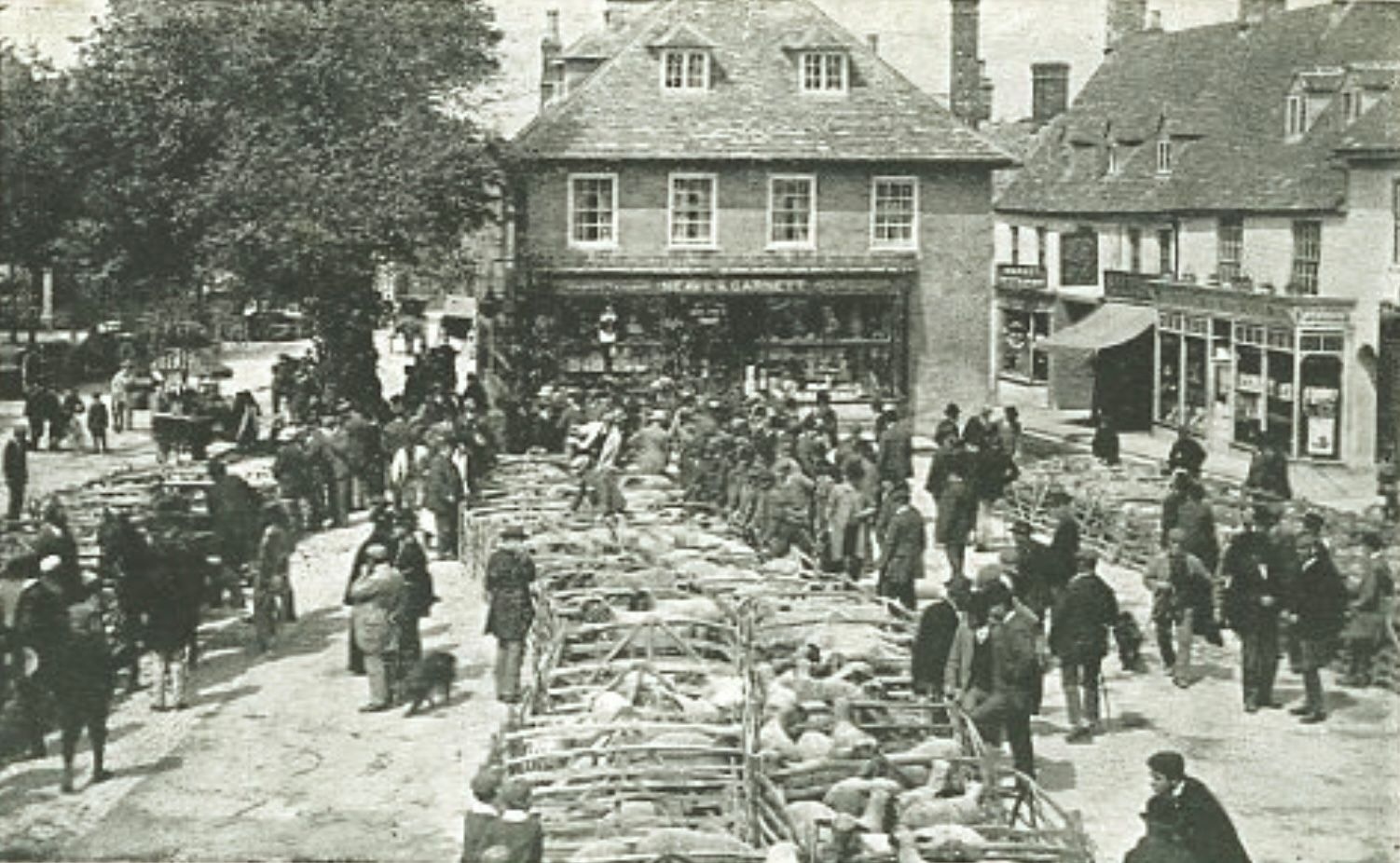
Witney livestock market
Thankfully, Joe was too young to remember one particularly shocking attraction at Witney market reported in the Oxford Journal on 4 May 1839: “SALE OF A WIFE! – Our market today was the scene of one of those disgraceful occurrences (happily not a frequent occurrence): the sale of a wife. The parties, we understand, were all from Oxford, and the public crier having given notice of what was to take place, the novelty of the thing attracted a vast concourse of persons to the spot. About one o’clock the woman was led with a halter about her neck round the market place three several times by her husband, followed by hundreds of people, the woman waving a blue handkerchief and altogether exhibiting a most barefaced and disgusting effrontery, after which the lot was put up and knocked down to a man, evidently an acquaintance, for the sum of ten pounds – a larger sum considerably than is generally obtained for such merchandise. The woman is understood to have given the purchase money which was handed over to the seller, and a stamp receipt given for the same. The parties then walked off together equally pleased.” [STOP PRESS! I have now identified “the parties”, and newsletter subscribers will learn the full, eye-popping details shortly.]
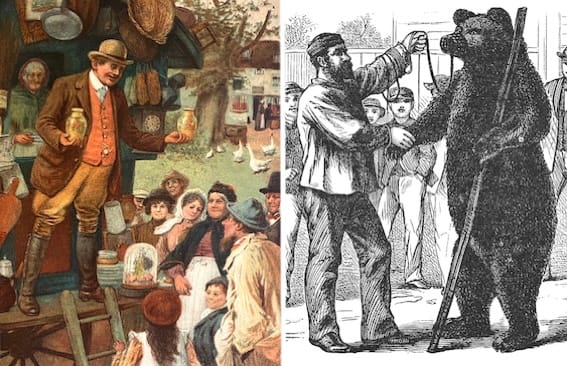
Cheapjacks and dancing bears
“To complete the market day show people known as Cheapjacks were at the side of the market selling every kind of cure-all. I remember one who sold pine-tree tablets for the heart which he said were a pine-tree forest in every home. I have personally seen dancing bears and men laying on their backs with a large stone on their bare chests and [customers were] invited to smash it with a sledge-hammer, all for about two and sixpence, collected in their own hat. Also men walking on red-hot and white-hot coals and some filling their mouths with petrol and blowing flames in the air.”
The bear pictured here has a staff strapped to his fore-leg to prevent him from following his natural inclination to flop down on to all-fours. The so-called “dancing” resulted from the bears being trained by standing on hot-coals while music was played. The association of the strains of music with the discomfort of burning paws encouraged the bears to shift about at the mere sound of a musical instrument, and thus appear to dance. Displaying dancing bears was officially banned in 1911.
Joe fought in World War I, serving with the Queen’s Own Oxfordshire Hussars at Ypres, Passchendaele and on the Somme, each time sustaining life-changing injuries. His brother George died of wounds.
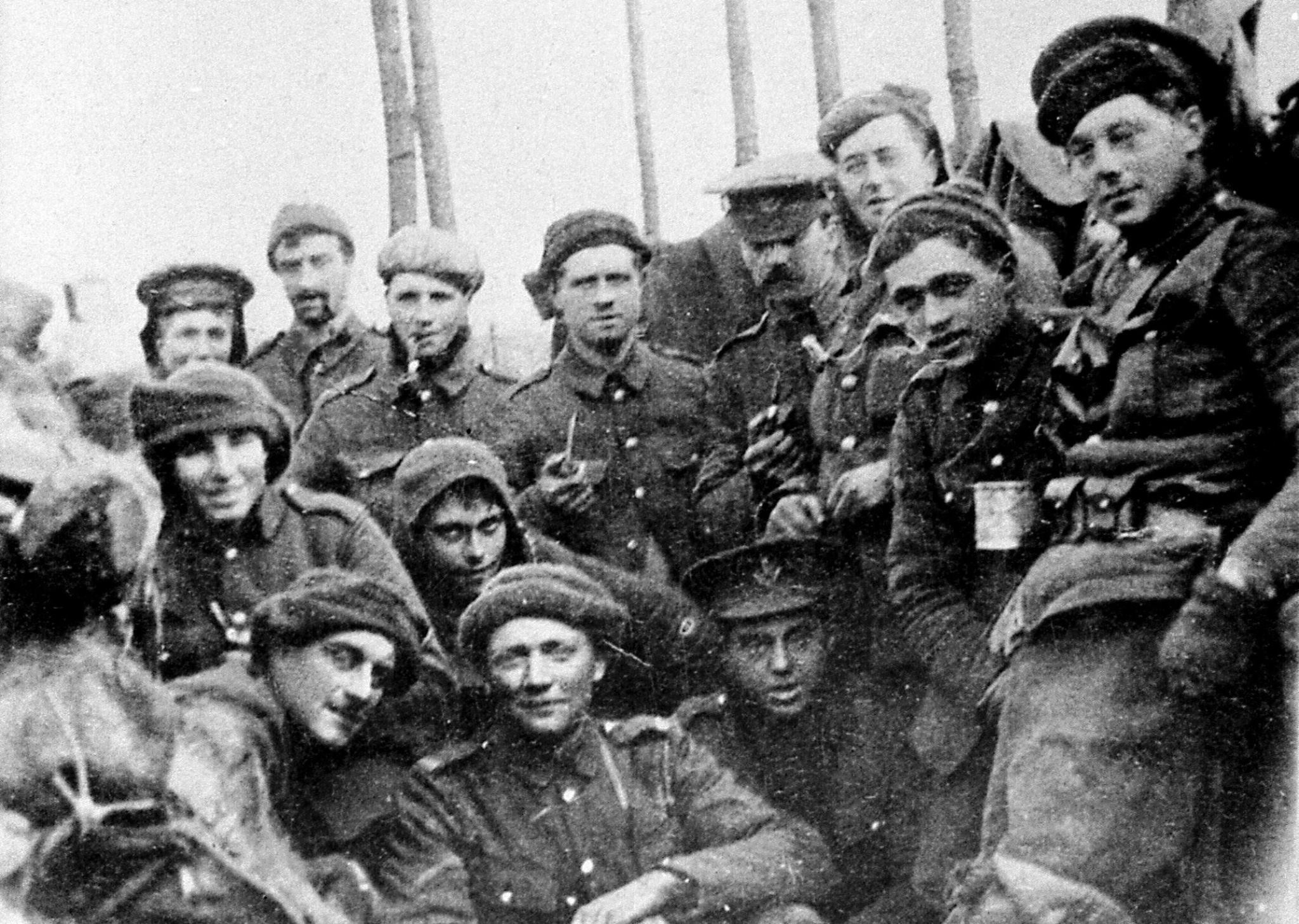
Joe is kneeling, front centre, his brother George stands on the right
When the Bell closed in 1920, Joe bought it. He rented it first to his sister Emily Midwinter and then to another sister, Rachel Coley. After retiring from business Joe moved to a little cottage in Corn Street which is now a gentlemen’s hairdresser’s. Number 57 was sold first to the Abbeyfield Society and then to Witney Town Charity which uses it as accommodation for adult supported living.
On the retirement of Joe and his brothers Jim and Bert, ownership of R A Jones Ltd was transferred to Jen Farmer’s brother Brian Taylor. He ran it with his wife and son until it closed in 2015, when the building was sold for conversion into residential and office accommodation.
Joe Jones died in 1980.
• Anybody with an Oxfordshire Libraries card can access Ancestry.com and FindMyPast.com free of charge in county libraries, providing they are able-bodied and can get to the library in the first place. Apply online at: https://www.oxfordshire.gov.uk/oxfordshire-libraries/using-library/join-library Housebound members still have to pay for access from home.
• Julie Ann Godson’s books on Oxfordshire history are available at Amazon.