- Forgotten Lives of Oxfordshire
- Posts
- All aboard for a cosy home
All aboard for a cosy home
by Julie Ann Godson
A shortage of homes after the Second World War meant that families in a struggling Britain – which had supposedly "won the war" – found themselves shuffled off into disused prisoner-of-war camps, ex-army camps, and just about anywhere with a roof. Almost every village included two or three converted railway carriages and, compared with Nissen huts, they were perhaps the more romantic option for emergency accommodation. My research suggests that they are remembered with great fondness. Children found the whole business exciting, and mothers would have noticed little difference between the lack of facilities in the carriages and in their former, cold and damp cottage homes.
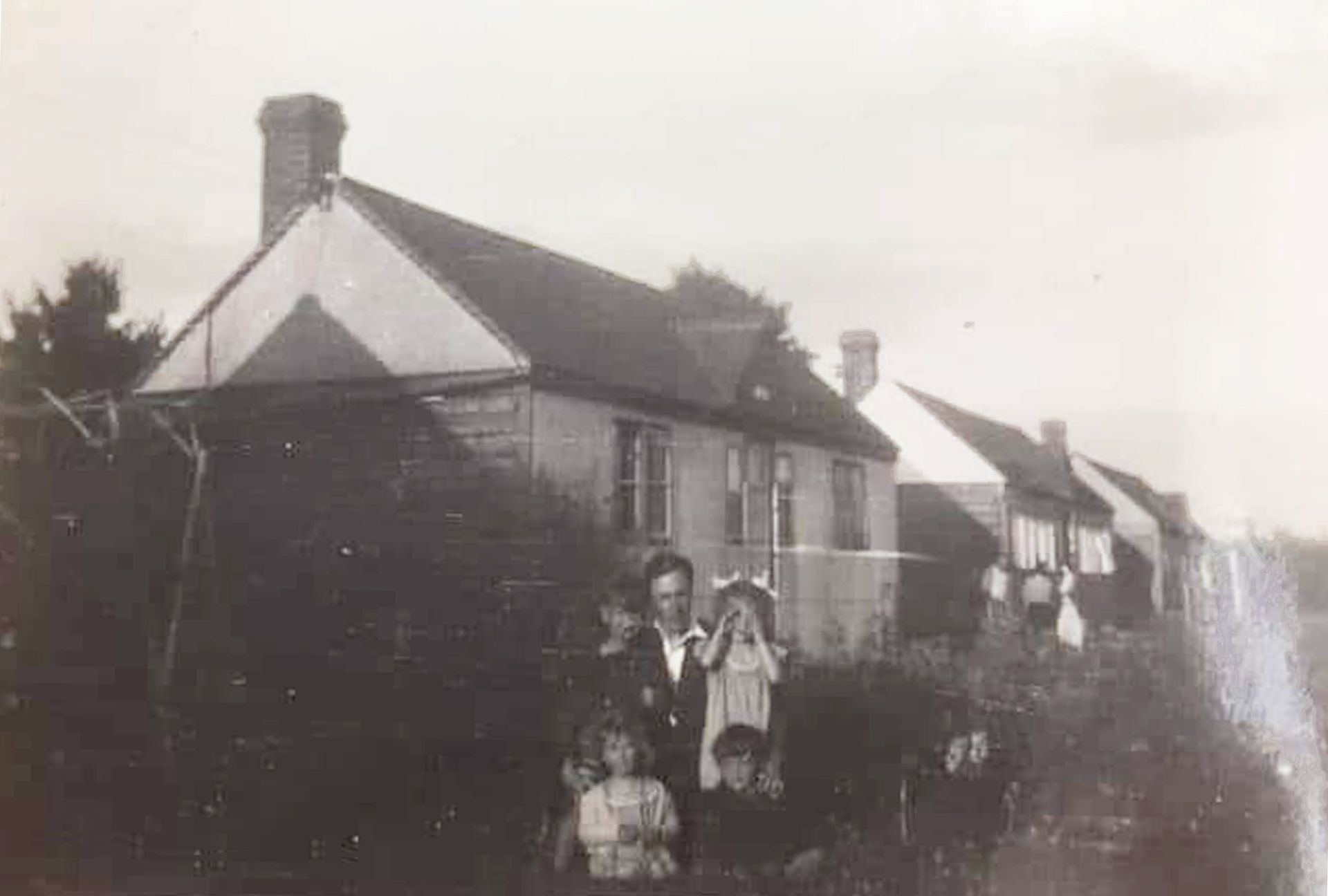
The Rance children and friends
FILM WAS DIFFICULT to get hold of so photographs are rare, but luckily four carriages at Sutton near Stanton Harcourt were captured for posterity. Says Angela Rance: “My husband and his family lived in the railway carriages in Sutton from 1945 to 1950. This photo [above] of my husband Graham Rance, his twin sister Helen, and his older sister Ann were taken around 1947. In 1950 they were rehoused in Eynsham. They were not given any choice of where they would be rehoused; the council randomly allocated them either to Eynsham or Witney. Where the main bread-winner was working may have been taken into consideration as my husband’s father worked at the car factory in Oxford, and those working at Smith’s 1 in Witney hoped to be housed in Witney.”
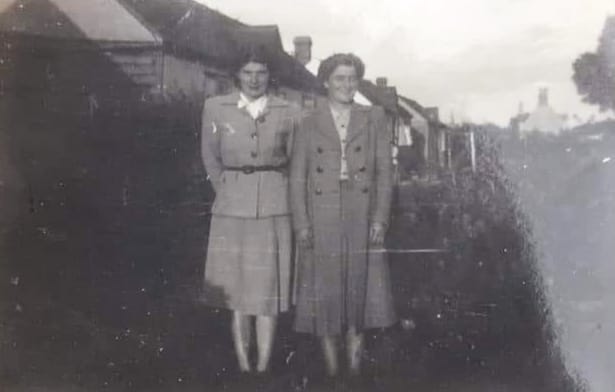
Judy Edney’s mother and aunt at ‘Rosedale’
And Judy Edney (née Smith) reveals: “My parents lived in ‘Rosedale’ in Sutton Lane. ‘Avondale’ was another carriage. The photo shows my mum on the left and her sister Joan. When they knocked them down a house was built and kept the name ‘Rosedale’.” One of the carriages still survives in a nearby garden, restored to its original condition by a local railway enthusiast.
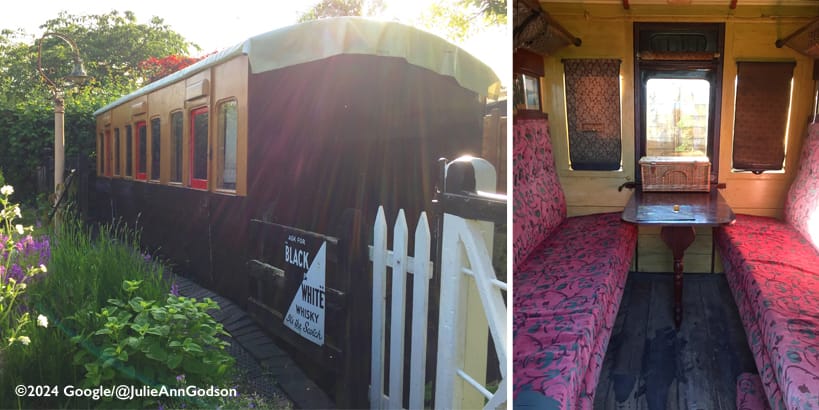
One of the Sutton Lane carriages, now restored
In nearby Standlake, Chainey Martin says his great-grandparents, Thomas and Lavinia Dipper, lived in a former railway carriage facing the village green. Before the carriage arrived at the Green it was on land belonging to Sue Cantwell’s family. Sue remembers that the conundrum of how to move the carriage down the hill to its new home was solved by the use of two tractors – one before and one aft – with the village children running alongside, squealing with excitement.
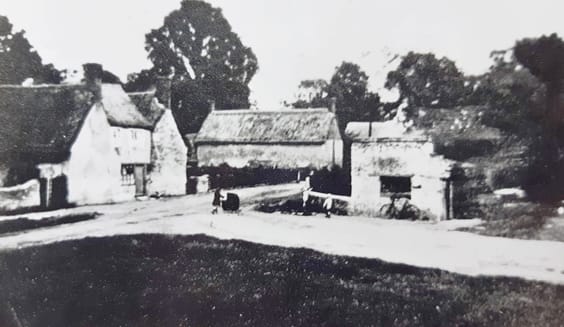
Right: The Dipper home at Standlake
Avril Wilkins (née Smith, now Crosssman) remembers the home in Steventon she returned to with her new husband Alan following their honeymoon in 1954. "There was a large main room with a proper fireplace, and the water tank was in the roof," she explains. Modern comforts were not lacking. "A kitchen and bathroom were built on, and a separate fireplace was added in my mother-in-law's half," she recalls. She and Alan brought up two sons in one half of the carriage while Avril's mother-in-law lived in the other. It was in fact, like many converted carriages, a survivor of the First World War, having once served as part of an ambulance train for the US Army.
But in the early hours of 10 January 1956, things got a bit too cosy for Alan and Avril. They were awakened by loud banging at the door. A passing railway worker had seen flames shooting out from beneath the carriage and rushed to warn the family within. The gas was quickly turned off and Mrs Wilkins grabbed her five-month-old baby. While she scrambled to safety Mr Wilkins rescued his mother. Fire tenders from Didcot and Abingdon managed to restrict the damage, but the heat caused the thick plate-glass in the doors and windows to explode “like fireworks”. The family passed the night in a neighbour's caravan and spent the next day salvaging what few possessions they could. It was soon discovered that the fireplace built for Avril's mother-in-law had been sited on top of a railway sleeper which had heated up to the point where it set fire to the surrounding wooden structure. But this was an uncomplaining generation, well aware of the trials endured by so many just over a decade before. Countless families in the cities had their homes destroyed around them, and absolutely anywhere that was away from the bombing was welcome.
As more housing became available and affluence increased, ordinary people began to buy the cars that Angela Rance’s father-in-law was building in Oxford, and railway carriages were relegated to leisure pursuits. At Sturt Farm near Swinford, a railway carriage formerly used as accommodation for farm workers was converted into tea rooms.

Diversification": team rooms in a carriage at Sturt Farm, Swinbrook
Families seeking low-budget holidays stayed in rail carriages all around Britain’s coast and, more locally, by the river at Bablock Hythe ferry crossing near Northmoor. Carriage bodies were used as holiday homes, but eventually it was decided to replace them with modern caravans. Over the weekend of Saturday 31 October and Sunday 1 November 1970, the site owners allowed Didcot Railway Centre volunteers to strip any parts they wanted from old carriage bodies. On the site itself, all trace is now gone.
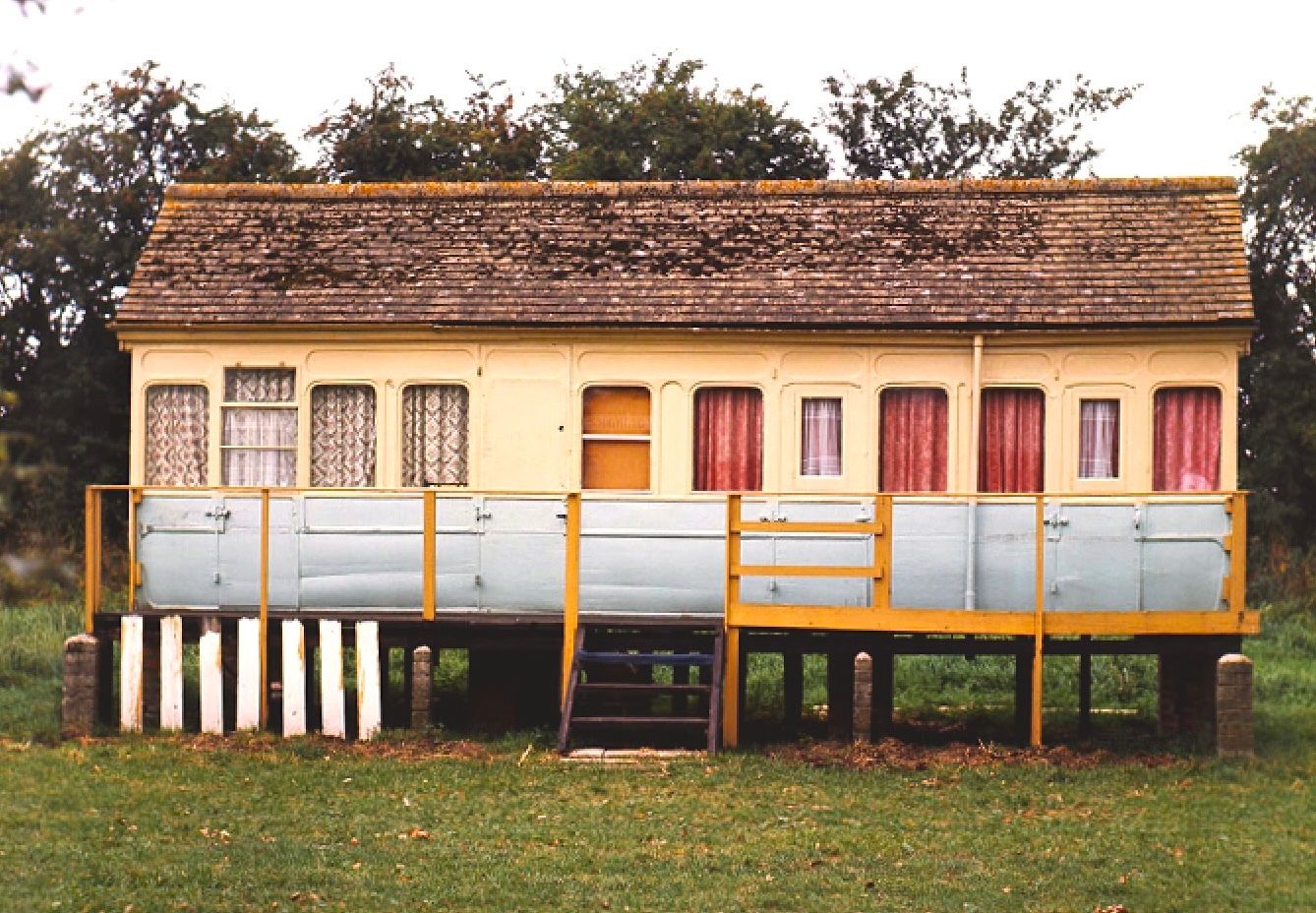
Bablock Hythe holiday homes near Northmoor [Didcot Railway Centre]
Once you get your eye in, old railway carriages can still be spotted, doing good work as accommodation in a country that is, we are told, wildly short of homes. Look at this beauty in Lower Whitley Road, at the Tumbledown end of Farmoor. The photo is from 2012, so I don’t even know if it is still standing; if it is, it is surely time we looked at listing these structures before any more disappear?
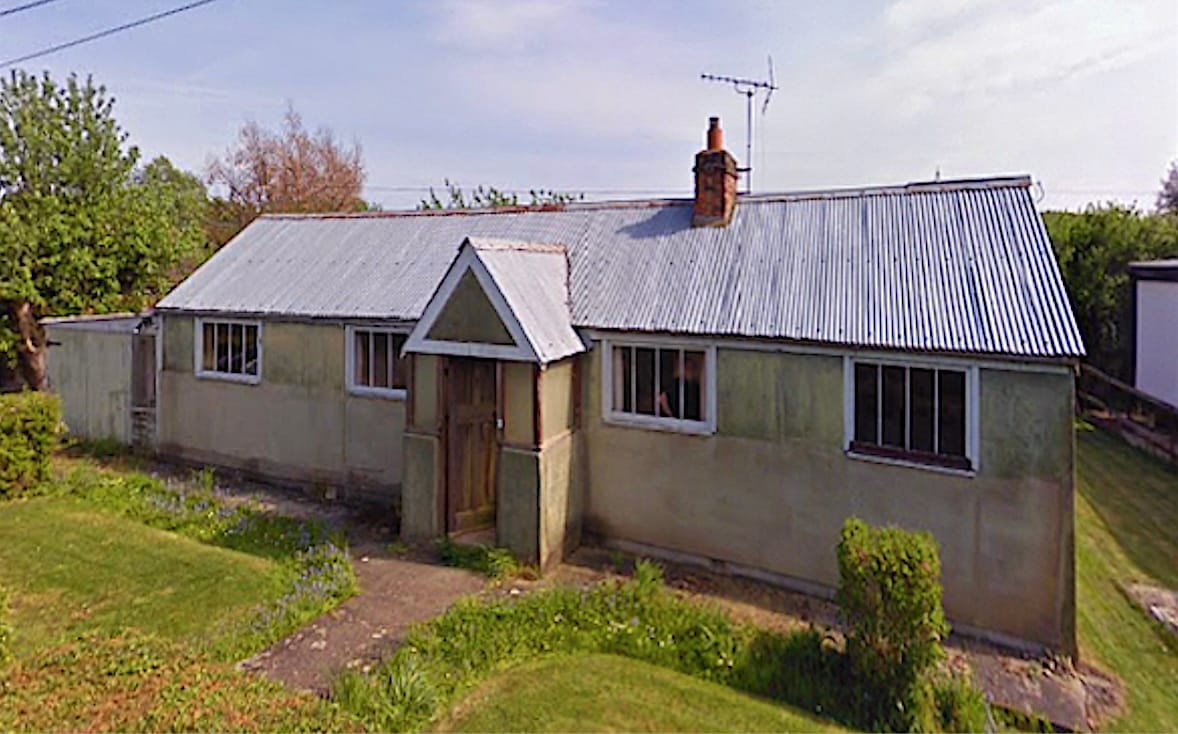
A candidate for listing? Lower Whitley Road in Farmoor [Google]
Julie Ann Godson’s local history books are available from Amazon.
1 W Smith & Co, blanket makers